Tour description
Vermuntsee - Hochmadererjoch - Tübinger Hütte - Vergaldaalpe - Vergaldatal - Zentrum Gargellen
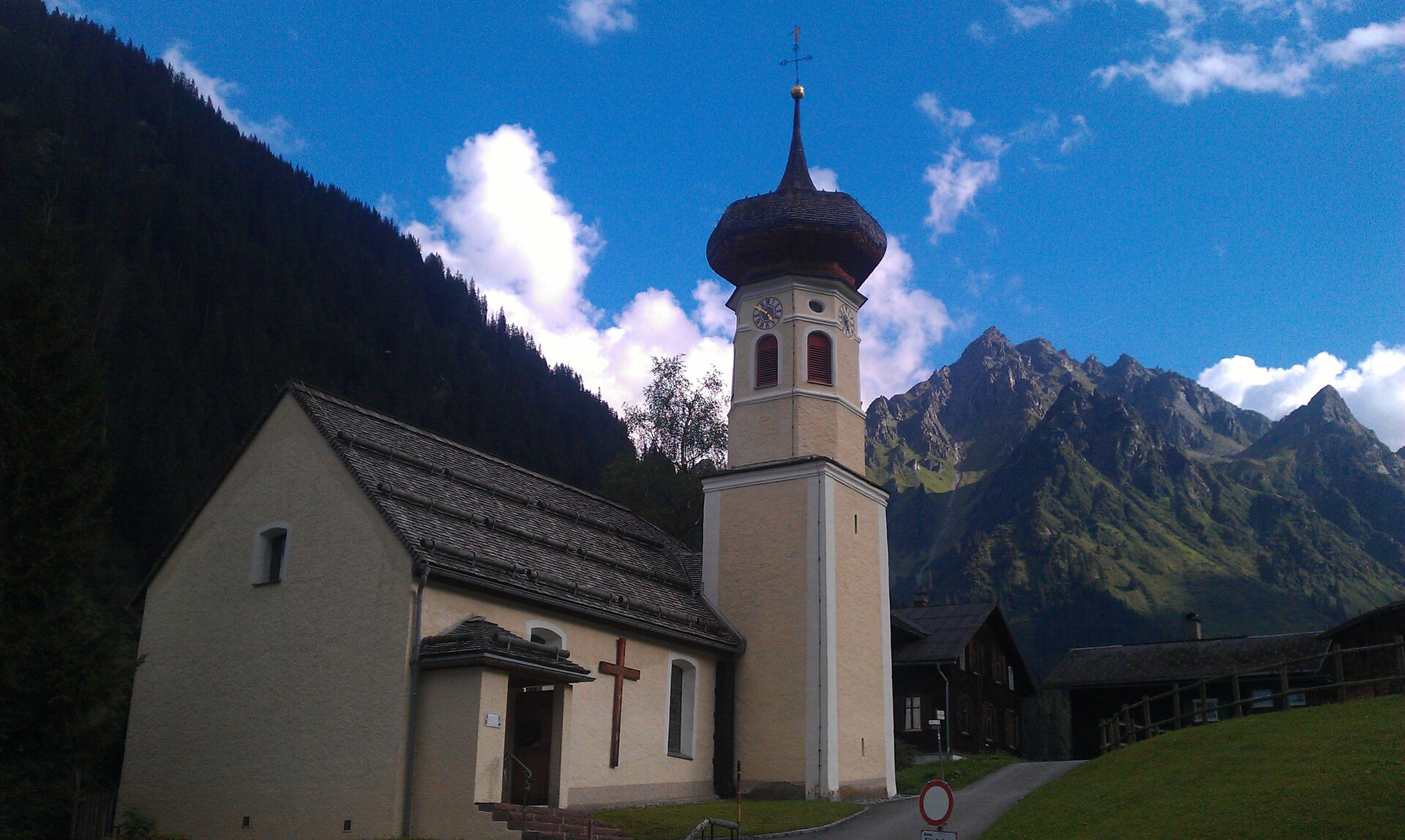
Church of St. Magdalena, Gargellen
Not only wine and traded goods once entered the Montafon via the Schlappiner Joch. During the Thirty Years' War, which turned former neighbors into political and confessional opponents in the Silvretta region, the Prättigau people came to Gargellen with hostile intent in 1622. They devastated the little church that had just been built and consecrated. Conversely, Montafon inhabitants also crossed passes and mountain saddles to set fire in Prättigau.
The complex religious and political conditions of the 17th century are also shown by the fact that the church in Gargellen, rebuilt after its destruction in 1622, was consecrated in 1644 by Bishop Johann VI of Chur. For the church and altar consecration, the bishop had to travel through Reformed areas, even the city of Chur was by then already Reformed. Prättigau also had converted to the new faith but was still under Habsburg and thus Catholic rule.
Despite all the political and confessional turmoil of its time, Gargellen’s church today shows an astonishingly rich interior: Just five years after the episcopal consecration, David Bertle, likely a predecessor of the famous Montafon artist family Bertle, created the popular Sebastian altar, which today serves as the right side altar. The left side altar dates from the late 17th century and originally came from Lech am Arlberg. This altar was brought to Gargellen in the late 18th century, when the church received its baroque onion dome tower. The main altar from 1906 is a Neo-Romanesque work but still displays two figures from the late Middle Ages: St. Magdalena and St. Martin.
Gargellen also has the Fidelis Chapel, another picturesque sacred building, but with a less pleasant background. The chapel is dedicated to St. Fidelis of Sigmaringen, who preached in Prättigau and was violently killed after a sermon in 1622.